Source 2 tier pull out sink organizer for Kitchen, Bathroom, Living Room
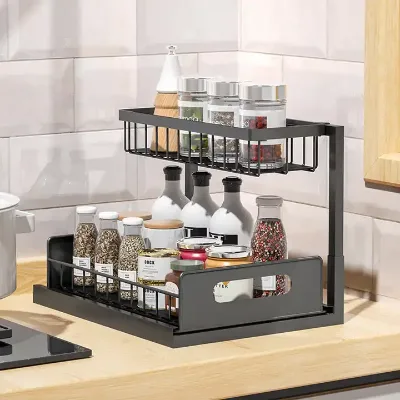
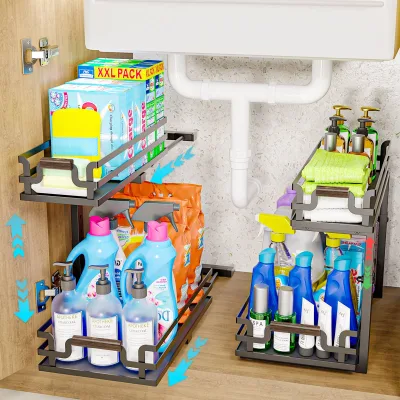
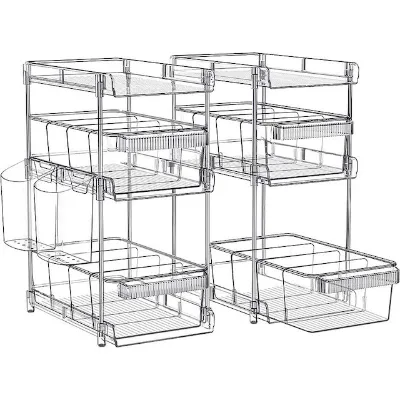
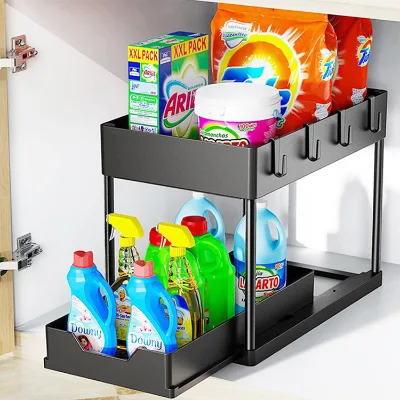
Find and compare 30 verified 2 tier pull out sink organizer options from Guangdong suppliers. Evaluate carbon steel and ABS models with double-layer designs, custom logo capabilities, and standing installation types for kitchen, bathroom, and living room storage needs.
Key considerations
Products List







Comprehensive Sourcing Guide
2 Tier Pull Out Sink Organizer Sourcing Guide
Product Scope and Observed Listing Signals
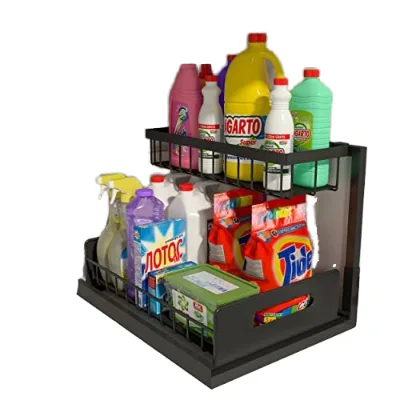
The market for under-sink storage solutions is characterized by a diverse range of products that share the core function of organizing kitchen and bathroom spaces, yet vary significantly in material composition and structural design. Current listings indicate a primary focus on carbon steel and metal constructions, with specific models identified as "Under Sink Organizer" or "2 Layer Storage Rack" designed for holding kitchen appliances, tableware, spices, and sundries. Buyers should note that while the core keyword suggests a "pull-out" mechanism, the observed product attributes frequently describe "Standing Type" installations and "Non-folding Rack" classifications, indicating that many available units are static shelving units rather than sliding drawer systems. This distinction is critical for procurement teams, as the mechanical complexity of a true pull-out system differs substantially from a fixed double-tier rack in terms of cost, durability, and installation requirements.
Observed listing signals reveal a wide variance in product specifications, with prices ranging from $1.81 to $107.18 USD and minimum order quantities (MOQs) spanning from 2 to 1,000 pieces. This broad spectrum suggests that the category includes both low-cost, basic metal racks and higher-end, feature-rich organizers with drawers or custom branding capabilities. The presence of attributes such as "Eco-Friendly" features and "Customized Logo Acceptable" indicates that suppliers are catering to both private-label buyers and those seeking sustainable sourcing options. However, the inconsistency in terminology—such as some listings mentioning "ABS" material while others specify "Carbon Steel"—requires buyers to carefully scrutinize individual product pages to ensure the material and design align with their specific functional needs, particularly regarding weight capacity and corrosion resistance in humid environments like kitchens and bathrooms.
Technical Specifications to Verify
When evaluating technical specifications, the most critical parameter to verify is the material composition, as the supplied data presents conflicting information regarding the primary build material. While some product attributes explicitly state "Carbon Steel Material" and "Metal," others list "ABS" as the main material, which typically refers to plastic components such as drawers or handles rather than the structural frame. Buyers must confirm whether the entire unit is metal, which offers superior durability and load-bearing capacity for heavy kitchen appliances, or if it is a hybrid construction with plastic elements that may degrade over time in high-moisture environments. Additionally, the "Dimensional tolerance" of less than ±1mm and "Weight tolerance" of less than ±1% are precise claims that should be validated through sample testing, as these tight tolerances are essential for ensuring that the organizer fits snugly under standard sinks without leaving excessive gaps or wobbling during use.
The structural design and tier configuration are equally important factors that require detailed verification. The observed products are predominantly described as "Double" tier or "Two Layers" organizers, with a "Single package size" of 50x60x60 cm and a "Single gross weight" of 1.56 kg for certain models. Buyers should assess whether the "Standing Type" installation is suitable for their specific under-sink layout, as some sinks have irregular shapes or protruding pipes that may obstruct a fixed rack. Furthermore, the presence of "Drawer" designs in some listings, such as the "Cosmetic Organizer with Drawers," suggests a multifunctional approach that may not be ideal for all kitchen storage needs. It is essential to determine if the "Non-folding Rack" classification applies to the entire unit or just specific components, as this impacts storage efficiency during shipping and potential future relocation of the product.
Compliance and Safety Documentation
Compliance and safety documentation are paramount when sourcing storage organizers for residential use, particularly given the potential for these products to be used in areas with high humidity and temperature fluctuations. The observed listings mention certifications such as BSCI and ISO, which indicate that the supplier adheres to certain social responsibility and quality management standards. However, buyers must verify the specific scope of these certifications, as they do not automatically guarantee that the product itself meets local safety regulations for materials used in food-adjacent environments. For instance, if the product contains ABS plastic components, it is crucial to ensure that these materials are free from harmful chemicals like BPA, especially if the organizer is intended to hold food items or tableware. Buyers should request material safety data sheets (MSDS) or third-party test reports to confirm that all components, including coatings and finishes, are non-toxic and safe for household use.
In addition to material safety, buyers should inquire about the structural integrity and stability of the organizer to prevent accidents such as tipping or collapse under load. While the "Weight tolerance" is specified as less than ±1%, this metric alone does not provide information on the maximum load capacity of the shelves. Buyers should ask suppliers to provide load-bearing test results or engineering specifications that detail the maximum weight each tier can safely support. This is particularly important for "2 tier under sink organizer" models that are marketed for holding heavy kitchen appliances or dense collections of tableware. Ensuring that the product meets relevant structural safety standards will mitigate the risk of product liability claims and enhance customer satisfaction by providing a reliable and secure storage solution.
Cost Drivers and Commercial Terms
The cost of a 2-tier pull-out sink organizer is influenced by several key drivers, including material selection, manufacturing complexity, and customization options. Carbon steel construction generally commands a higher price point than plastic or hybrid materials due to the cost of raw materials and the energy-intensive nature of metal fabrication. However, the observed price range of $1.81 to $107.18 USD suggests that significant cost variations exist based on features such as drawer mechanisms, surface finishes, and branding capabilities. Buyers seeking to optimize costs should consider whether custom logos or OEM/ODM services are necessary, as these additions can increase the unit price and potentially raise the MOQ. Understanding the trade-off between customization and cost is essential for developing a competitive pricing strategy for the end product.
Commercial terms, including MOQs and packaging details, also play a significant role in the total cost of ownership. The observed MOQ range of 2 to 1,000 pieces offers flexibility for buyers with varying order volumes, but it is important to align the order quantity with the supplier's production capabilities and lead times. Packaging is another critical factor, as the "Single package size" of 50x60x60 cm and the "prod_packing" details of 1PCS/Brown Box and 12PCS/Outer Carton impact shipping costs and storage requirements. Buyers should calculate the landed cost by factoring in freight charges, which are heavily influenced by the volume and weight of the packaged goods. Additionally, negotiating favorable payment terms and understanding the supplier's policy on defects or returns can help mitigate financial risks associated with the procurement process.
Supplier Qualification and Quality Control
Supplier qualification is a foundational step in ensuring the reliability and consistency of the 2-tier sink organizer supply chain. Buyers should prioritize suppliers who demonstrate a strong track record in manufacturing metal or plastic storage solutions, as evidenced by their production capacity, technical expertise, and past client references. The presence of "OEM & ODM" capabilities suggests that the supplier is equipped to handle custom designs, which is a positive indicator of their engineering and manufacturing flexibility. However, buyers must conduct thorough due diligence to verify the supplier's financial stability, production facilities, and quality management systems. This may involve requesting virtual factory tours, reviewing audit reports, or engaging third-party inspection agencies to assess the supplier's operational integrity and compliance with ethical labor practices.
Quality control measures must be rigorously implemented throughout the production process to ensure that the final product meets the specified technical and aesthetic standards. Buyers should establish clear quality acceptance criteria based on the observed specifications, such as dimensional tolerances, weight limits, and surface finish quality. Implementing a pre-production sample approval process is essential to validate the design and materials before mass production begins. During production, regular in-process inspections can help identify and rectify defects early, reducing the risk of receiving non-conforming goods. Finally, a pre-shipment inspection should be conducted to verify that the packaged products meet all quality requirements and are ready for delivery. Establishing a robust quality control framework will help maintain product consistency and protect the buyer's brand reputation.
Long-Term Procurement Checks
Long-term procurement success depends on establishing a sustainable and resilient supply chain that can adapt to changing market demands and operational challenges. Buyers should regularly review supplier performance metrics, including on-time delivery rates, product quality consistency, and responsiveness to issues. Building a strong relationship with the supplier through open communication and collaborative problem-solving can foster trust and encourage the supplier to prioritize the buyer's orders. Additionally, buyers should stay informed about industry trends and technological advancements in storage solutions, as this knowledge can inform future sourcing decisions and product development strategies. By maintaining a proactive approach to supplier management, buyers can mitigate risks and ensure a steady supply of high-quality 2-tier sink organizers.
It is also crucial to monitor the total cost of ownership over time, as initial savings may be offset by hidden costs such as shipping delays, quality issues, or currency fluctuations. Buyers should periodically reassess their sourcing strategy to identify opportunities for cost optimization, such as consolidating orders, negotiating better payment terms, or exploring alternative suppliers. Furthermore, staying compliant with evolving regulatory requirements and sustainability standards is essential for maintaining market access and brand integrity. By continuously evaluating and refining their procurement processes, buyers can build a resilient supply chain that supports long-term business growth and customer satisfaction. This ongoing diligence ensures that the sourcing of 2-tier pull-out sink organizers remains a strategic advantage rather than a logistical burden.
FAQs
What materials are used for the 2 tier pull out sink organizer?
The organizer is primarily constructed from carbon steel and metal, with some variants featuring ABS plastic components. These materials ensure durability and stability for holding kitchen appliances, tableware, and spices. The metal construction supports the double-layer design, while ABS parts may be used for drawer mechanisms or cosmetic organizers. This combination provides a robust solution for under-sink storage needs in various home environments.
Can I customize the logo on the 2 tier pull out sink organizer?
Yes, customized logos are acceptable for this product. OEM and ODM services are highly welcomed, allowing buyers to brand the organizer with their own designs. This customization is available for both the carbon steel and ABS material variants. Buyers should contact suppliers directly to discuss specific branding requirements, minimum order quantities for custom printing, and any additional costs associated with logo application on the white or black finishes.
What is the typical MOQ for ordering this under sink organizer?
The minimum order quantity is typically 100 pieces, though observed ranges extend from 2 to 1000 units depending on the supplier. Standard packaging includes single items in PE bags or poly foam, with bulk cartons holding 12 pieces. Buyers should verify the exact MOQ with specific manufacturers, as it may vary based on customization needs, material selection, and current production capacity. Early inquiry is recommended to secure favorable terms.
Where is the 2 tier pull out sink organizer manufactured?
The product originates from Guangdong, China. This region is known for its manufacturing capabilities in home storage organization and metal fabrication. Buyers sourcing from this location can expect established supply chains for carbon steel and ABS materials. The place of origin is a key factor for logistics planning and lead time estimation. It is advisable to verify specific factory locations within Guangdong for more precise shipping calculations and quality control assessments.
Does the 2 tier pull out sink organizer come with certifications?
Some variants of the 2 layer storage rack carry BSCI and ISO certifications. These certifications indicate compliance with specific social responsibility and quality management standards. Buyers requiring certified products should explicitly request documentation from suppliers during the inquiry process. Not all models may hold these certifications, so verification is essential. The presence of these standards can be a deciding factor for buyers in regulated markets or those with strict corporate social responsibility policies.
What are the dimensions of the packaged 2 tier pull out sink organizer?
The single package size is approximately 50x60x60 cm, with a gross weight of 1.56 kg. Dimensional tolerance is maintained within ±1mm, and weight tolerance within ±1%. These specifications are critical for calculating shipping volume and freight costs. The medium size fits standard under-sink spaces. Buyers should use these dimensions for accurate logistics planning, ensuring the product fits within their storage and distribution constraints without unexpected size discrepancies.